

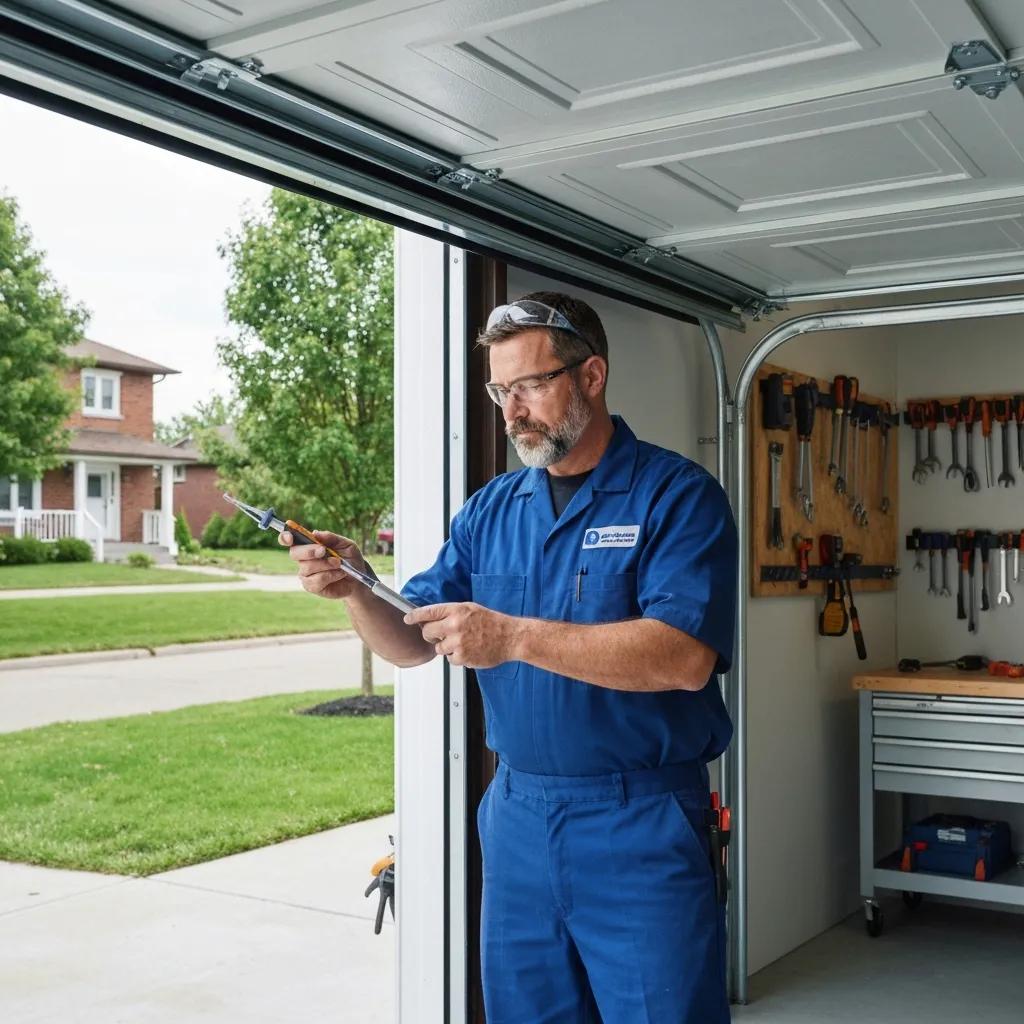
Emergency Garage Door Repair in Montreal — 24/7 Service and Fast Response

A sudden garage door malfunction can block access and create a security risk for homes and businesses throughout Montreal. This guide explains how emergency response services handle these situations: which malfunctions are most common, what safe steps you can take while waiting for a technician, and why it’s best to avoid tinkering with live components. You’ll find clear explanations of common malfunctions—broken springs, faulty openers, doors off their tracks, and damaged cables—as well as the emergency response process, factors that influence cost, and preventative measures to reduce incidents. We’ve included handy checklists, practical safety tips, and clear expectations for the repair process so you can quickly restore access and security to your property. Throughout the guide, we also detail how local crews coordinate a rapid response across Montreal neighbourhoods and surrounding areas to minimize downtime.
What are the most frequent emergency problems in Montreal?

Garage door emergencies are sudden malfunctions that compromise access or safety and require prompt professional intervention. They often result from mechanical failures—broken torsion or extension springs, malfunctioning motors or electrical components of the opener, frayed or broken cables, or doors coming off their tracks. Each situation can render the door unsafe or unusable. Recognizing the signs allows you to prioritize your response and avoid further damage to the panels, the opener, or vehicles. Here are the most common emergencies and the signs to watch for to act safely.
Common emergency problems:
- Broken torsion or extension springs : the door may get stuck, fall suddenly or become unbalanced.
- Failure of the opener’s motor or electrical components : the door no longer responds to commands or emits abnormal noises.
- Door out of its rails or bent rollers : blockages, squeaking or irregular movement along the rails.
- Broken or frayed cables : visible damage to the cables and uneven lifting of the door.
- Sensor or safety device problem : the door reverses for no reason or refuses to close.
Identifying the primary symptom indicates the safest course of action: stop using the door and perform basic safety checks before calling a professional. The following sections explain why door springs and openers pose a high risk and why qualified intervention is necessary.
What dangers do broken springs pose?
Springs store considerable energy and control the door’s balance—which is why a broken spring is one of the most dangerous malfunctions. A broken spring can cause the door to suddenly drop, become extremely heavy to lift, or hang crookedly, exposing people, animals, and property to a risk of compression. Handling a spring without proper equipment or training can cause serious injury. Technicians use safe power-off and replacement procedures to control the stored energy and restore balance. If you suspect a broken spring, do not touch the door, keep children and animals away, and wait for emergency service. Understanding these dangers explains why professionals always prioritize springs during critical calls.
Understanding Garage Door Spring Physics for Emergency Repairs
This paper focuses on the most common cause of garage door failure: a broken spring. It explains the components and lifting mechanisms of overhead doors, then explores spring theory and calculations to help technicians match the correct spring to each door. The study includes a spring conversion calculator and a technical overview useful for emergency repair planning.
The physics behind garage door springs, 2017
What causes garage door opener malfunctions and how are they repaired?
Garage door opener malfunctions often stem from an overheating motor, burnt-out circuit boards, faulty remote controls or keypads, misaligned sensors, or a power outage. These issues manifest as a lack of response, grinding noises, or interrupted opening/closing cycles. Technicians begin by checking the power supply and wiring, testing the motor and capacitors, and verifying the limit switches and sensor alignment. Solutions range from simple adjustment and cleaning to component replacement, or even complete replacement of the garage door opener if the electronics are beyond repair. Accurate diagnosis prevents unnecessary replacements and ensures a reliable return to service before any real-world testing.
The table below summarizes emergency failures, their signs and the degree of urgency to help quickly assess the situation.
| Issue | Typical symptom | Emergency |
|---|---|---|
| Torsion/extension spring failure | Door jammed, unexpected fall, heavy to lift | High — do not attempt repair yourself |
| Motor or electronic failure of the opener | No response to commands, grinding noises | High — impacts access and security |
| Door off its tracks / bent rollers | The door sticks, squeaks, or moves unevenly. | High — risk of collapse or blockage |
| Broken or frayed cable | Visible damage, uneven door movement | High — cables under high tension |
| Sensor or safety device failure | The door reverses or doesn’t close. | Medium-high — safety risk |
This guideline helps prioritize emergency calls and avoid dangerous temporary interventions. The following section describes how local emergency teams organize themselves and what qualifications they bring to these high-risk repairs.
How does MTL Door Pro ensure 24/7 emergency response in Montreal?

A reliable emergency service combines 24/7 availability, certified technicians, and standardized, safety-focused procedures. A good provider uses efficient triage and dispatch to prioritize hazards, sends technicians equipped with the necessary parts and tools, and follows strict protocols to isolate and repair on-site while minimizing risk. Rapid arrival limits exposure to hazards and further damage, while technical expertise ensures the safe handling of springs, cables, and electrical components. mtldoorpro.ca
Why is rapid intervention so crucial?
A rapid response prevents intrusions, reduces the risk of injury from unstable components, and limits damage to vehicles or the structure. For example, a broken torsion spring left unattended can cause a door to suddenly collapse, damaging everything below and injuring people nearby; a faulty door opener can allow unauthorized access. Rapid dispatch also reduces exposure to the elements for a partially open door and prevents a minor malfunction from becoming a costly replacement. In short: speed reduces risk and costs, hence the priority given to situations of immediate danger.
What expertise do the technicians bring?
Certified technicians apply structured diagnostics, safe techniques for handling springs, electrical troubleshooting skills, and on-site decision-making that sets them apart from DIY repairs. They assess balance, inspect springs and cables, check tracks and rollers, and test the opener’s electronics—all with professional tools and safety protocols to manage hazardous energy. Their experience allows them to select the precise parts, perform operations efficiently, and test the door under load to confirm the repair. This protects homeowners and businesses from recurring breakdowns and provides guidance on maintenance to prevent emergencies.
What is the typical process for an emergency repair with MTL Door Pro?
The process begins with a quick call and triage, followed by on-site diagnosis, prioritized repair to restore safe access, testing, and clear billing. The goal is to isolate the immediate danger first, then restore function before addressing non-urgent work. Transparent communication at each stage sets expectations for necessary parts and follow-up appointments for replacements or maintenance. mtldoorpro.ca
Typical steps:
- Initial call and triage : symptoms are collected, security risks are confirmed and dispatch is prioritized.
- Dispatch and arrival : the technician arrives equipped to diagnose and stabilize.
- On-site diagnosis : quick checks of springs, cables, door opener and rails.
- Immediate repair or stabilization : safety-focused interventions to restore access.
- Testing and cleaning : load testing and sensor checks; area cleaning.
- Estimation and invoicing : detailed report of work performed and follow-up recommendations.
These steps describe the customer journey from the initial call to service restoration. The table below details the expected outcomes for each phase.
| Phase | Action | Expected result |
|---|---|---|
| Call & Triage | The client reports the symptoms and risks | Secure prioritization and dispatch decision |
| Dispatching | The technician goes to the site with tools and parts | Rapid arrival and initial stabilization |
| Diagnostic | Inspection of springs, cables, door opener and sensors | Problem identified and repair plan |
| Repair | Replacement or repair of parts, securing and calibration | Access and operation restored securely |
| Test & Delivery | Functional checks and explanation to the customer | Functionality confirmed and instructions for use |
This process sets clear expectations for how professionals handle emergencies and why each step is necessary. The following sections detail diagnostic priorities and the sequence of interventions on site.
How do we diagnose and prioritize emergency breakdowns?
Emergency triage prioritizes the detection of immediate risks of collapse, unsafe opening, or electrical hazards before addressing comfort-related issues. Technicians first check spring tension and cable integrity, then track alignment and opener functionality, following a sequence that quickly reveals safety threats. Priority is given to elements that endanger lives or property, followed by restoring door movement, and finally addressing non-critical repairs. This systematic approach minimizes risks and ensures a safe and lasting repair, with clear explanations to the customer regarding the necessary parts.
What are the typical steps, from the initial call to the completion of the work?
On-site, technicians first isolate the door opener’s power supply and secure the door to prevent any unintentional movement. They then remove and replace any defective components, if necessary, followed by calibration and safety testing. Damaged springs or cables are replaced, worn rollers or rail sections are changed, and the limit switch and sensor settings are tested under load. A cleaning and a report to the client detail the work carried out, the parts replaced, and preventative recommendations. This process ensures safe access quickly and allows for follow-up to prevent recurrence.
Which areas of Montreal and surrounding regions are served?
Proximity is essential for reducing response times: services are generally concentrated in central Montreal neighborhoods while covering neighboring towns for emergencies. Prioritizing nearby areas allows for same-day intervention when safety, property, or access to businesses is at stake, and limits the risk of a simple problem becoming a costly replacement. mtldoorpro.ca
Which Montreal neighborhoods benefit from priority service?
Priority areas include high-density residential and commercial neighborhoods where immediate access and safety are critical. Prioritization is based on proximity, call severity, and demand trends, which guides dispatch organization to best cover the city. Teams maintain designated slots and staging areas in central sectors to ensure rapid response to urgent calls. Knowing if your district is prioritized helps set realistic expectations for response times and temporary measures to take while waiting.
How far does coverage extend in Laval, Westmount and the South Shore?
Extending the service area beyond downtown Montreal requires logistical planning to position technicians and equipment and define service boundaries to ensure a rapid response. For Laval, Westmount, and the South Shore, interventions can originate from staging points or local partners to provide coverage during peak hours. During the initial call, report all symptoms to allow for accurate triage and dispatch of the nearest available resource. This extension broadens our reach while maintaining the ability to respond quickly to high-risk cases.
How much does an emergency repair cost in Montreal?
The price of an emergency service call varies depending on several factors rather than a fixed rate. Understanding these factors helps you anticipate the cost and make informed decisions when you call. The main factors are: the parts needed (springs, cables, rollers, door opener components), the complexity of the job, surcharges for after-hours service, the availability of specific parts, and the extent of the damage (repair vs. replacement). Reputable providers explain these factors and offer a free estimate before starting work to ensure transparency. mtldoorpro.ca
The table below describes these factors and their impact on price to understand why a technical visit is often necessary to establish an accurate quote.
| Repair component | Cost factor | Impact on price |
|---|---|---|
| Spring replacement | Spring type and installation complexity | Higher if multiple springs or high-tension adjustments are required |
| Opener repairs | Electronic component vs. complete motor replacement | Replacing the circuit board or motor significantly increases the cost of parts |
| Emergency call | Hours of operation and priority dispatch | Interventions outside normal hours or emergencies may incur an additional charge. |
| Cable and rail repair | Extent of damage and necessary realignment | Bent rails or multiple cable replacements increase labor costs |
| Diagnosis time | Complexity in isolating the fault | Prolonged diagnostics increase the labor component |
This table shows why an on-site assessment is required for an accurate price and why free quotes are important for transparency. Here are some details to help you prepare for an estimate.
What factors influence the cost of an emergency intervention?
Several interconnected factors influence the cost: parts availability, the complexity of handling springs or electrical components, work outside normal business hours, and the presence of structural damage. Brand-name or specialized parts often increase the bill; a repair that restores function without replacement will be less expensive. Technicians recommend repair or replacement based on safety, durability, and cost-effectiveness, and explain the trade-offs so you can make an informed decision. Clear communication avoids surprises and aligns the solution with your safety and budget priorities.
How does MTL Door Pro guarantee competitive prices and free quotes?
MTL Door Pro offers competitive pricing and free estimates to clarify the scope of work before any intervention. In an emergency, our dispatch team will triage your call and arrange for the nearest available technician to be sent. You will then receive a transparent estimate detailing parts, labor, and any emergency surcharges to help you make an informed decision. For immediate assistance or a free quote, contact MTL Door Pro at 514-270-0539; our dispatch team will handle your call and mobilize the nearest available resource. mtldoorpro.ca
Frequently Asked Questions about Emergency Repairs in Montreal
Here are clear and practical answers to the questions we most often receive in emergency situations. They aim to quickly guide you on the safe checks to perform and when to call a professional .
- What should I do if my door won’t open during an emergency? First, check the power supply and indicator lights on the door opener. Do not force the door, and only use the manual release if you know how to secure the door afterward. Call an emergency service for a safe diagnosis.
- Can I replace a broken spring myself? No — replacing a spring is dangerous. Have it done by a qualified technician with the proper tools and safety procedures.
- Is it safe to operate a door that’s off its tracks? No — it could cause a collapse. Secure the area and wait for a professional.
- Does the emergency service cover door openers and locks? Yes — many providers offer combined services to restore access and security.
What should I do if my door doesn’t open during an emergency?
If the door won’t open, first check if the garage door opener is receiving power and if any indicator lights are on. If the opener is not powered, do not attempt any risky manual repairs. Do not try to lift the door if you suspect a problem with the springs or cables—this could cause it to collapse. Use the manual release only if you know how to secure the door in a safe position. In all cases, call an emergency service for diagnosis and safe repair.
Can I repair a broken spring myself, or should I call a professional?
Call a professional. The springs are under extreme tension, and handling them without specialized equipment can result in serious injury and property damage. Trained technicians have the parts, tools, and procedures to safely release and replace the springs, then balance the door to prevent premature wear. DIY work on the springs often leads to installation errors and repeated failures, increasing costs in the long run.
How to maintain your garage door to avoid emergencies?
Preventive maintenance reduces emergency calls by detecting wear and alignment problems early. Regular checks extend component life and improve safety. A simple routine includes lubricating moving parts, balancing, cleaning and aligning sensors, inspecting rollers and rails, and regular professional inspections to spot spring fatigue or cable wear. mtldoorpro.ca
Here are some practical steps and a list of signs that should trigger an immediate professional inspection.
- Lubricate moving parts : apply a recommended lubricant to rollers, hinges and torsion components according to the manufacturer’s intervals.
- Perform a balance test : with the door opener disconnected, lift the door halfway up to check for a smooth and even movement.
- Clean and align the sensors : wipe the sensor lenses and make sure they are facing each other to avoid accidental reversals.
- Inspect cables and rollers : look for fraying, corrosion or bent rollers as early warning signs of failure.
What signs indicate an emergency?
Warning signs include a popping sound, jerky or erratic movement, frayed cables, visible broken components, a door sagging to one side, or sensors causing unexpected reversals. If you observe any of these signs, stop all use, secure the area, and contact emergency services to prevent injury or further damage. Reporting these symptoms early often allows for planned repair rather than a complete replacement.
How does regular maintenance extend the lifespan of components?
Regular maintenance reduces wear by ensuring proper lubrication, alignment, and tension, which minimizes friction, prevents corrosion, and maintains smooth operation. Scheduled checks detect spring fatigue, cable wear, and adjustment drift before they cause emergencies. Replacing a small part promptly often prevents more costly damage to the entire system. Companies that adhere to a maintenance schedule experience fewer emergencies and lower lifecycle costs. Adopting a preventive maintenance plan reduces emergency interventions and improves long-term reliability.
- Schedule regular inspections : a pro check once or twice a year reveals hidden wear and tear.
- Follow the manufacturer’s recommendations : use recommended lubricants and parts for best results.
- Respond to warning signs : immediately address abnormal noises, imbalance, or sensor problems to prevent escalation.
These best practices form a coordinated approach to reduce emergencies and extend the lifespan of your door. If an emergency does occur, however, contact qualified emergency services to ensure safety and reliability.
Frequently Asked Questions
What should I do if my garage door is stuck and won’t open?
First, check the power to the opener and remove any visible obstructions. Do not force the door — forcing can cause more damage or injury. If the door stays stuck, use the manual release only if you can secure the door safely afterward. For a safe diagnosis and repair, contact a professional emergency service.
How can I tell if my garage door springs need to be replaced?
Signs include a door that’s hard to lift, noticeable imbalance when opening, or a sudden drop after lifting. A loud bang or visible damage to the springs means stop using the door immediately. Call a qualified technician to inspect and replace springs safely.
Are there preventative measures I can take to avoid emergency repairs?
Yes. Regular maintenance — lubricating moving parts, checking the door balance, inspecting cables and rollers, and keeping sensors clean and aligned — reduces emergency risk. Schedule a professional inspection at least once a year to catch issues early and save time and money.
What are the risks of attempting DIY repairs on garage doors?
DIY repairs can be extremely dangerous, especially for springs and openers under high tension. Incorrect handling can lead to severe injury or more damage. Technicians have the training and tools to do these repairs safely and correctly.
How quickly can I expect a technician to arrive for emergency repairs?
Response times depend on location and time of day, but reputable services aim to reach you within 1–2 hours in high-demand areas. Provide clear details about the issue and your location when calling to speed up dispatch.
What should I look for in a reliable garage door repair service?
Choose licensed, insured technicians with solid reviews. A trustworthy service offers transparent pricing, free estimates and explains the repair process clearly. Availability of 24/7 emergency service is a strong sign of commitment to safety and customer care.
Can garage door issues affect my home insurance?
Yes. If a malfunction causes property damage or injury, it can lead to an insurance claim. Regular maintenance helps prevent incidents; keep records of service to support any insurance process and consult your insurer for specifics about coverage.
Conclusion
Emergency repair services in Montreal offer fast solutions to restore security to your access points and protect your property. By understanding common malfunctions and calling on qualified professionals, you can prevent further damage and preserve the safety of your property. Don’t let a breakdown disrupt your day: contact our technicians for a prompt response. To learn more about our emergency services, visit our website.