

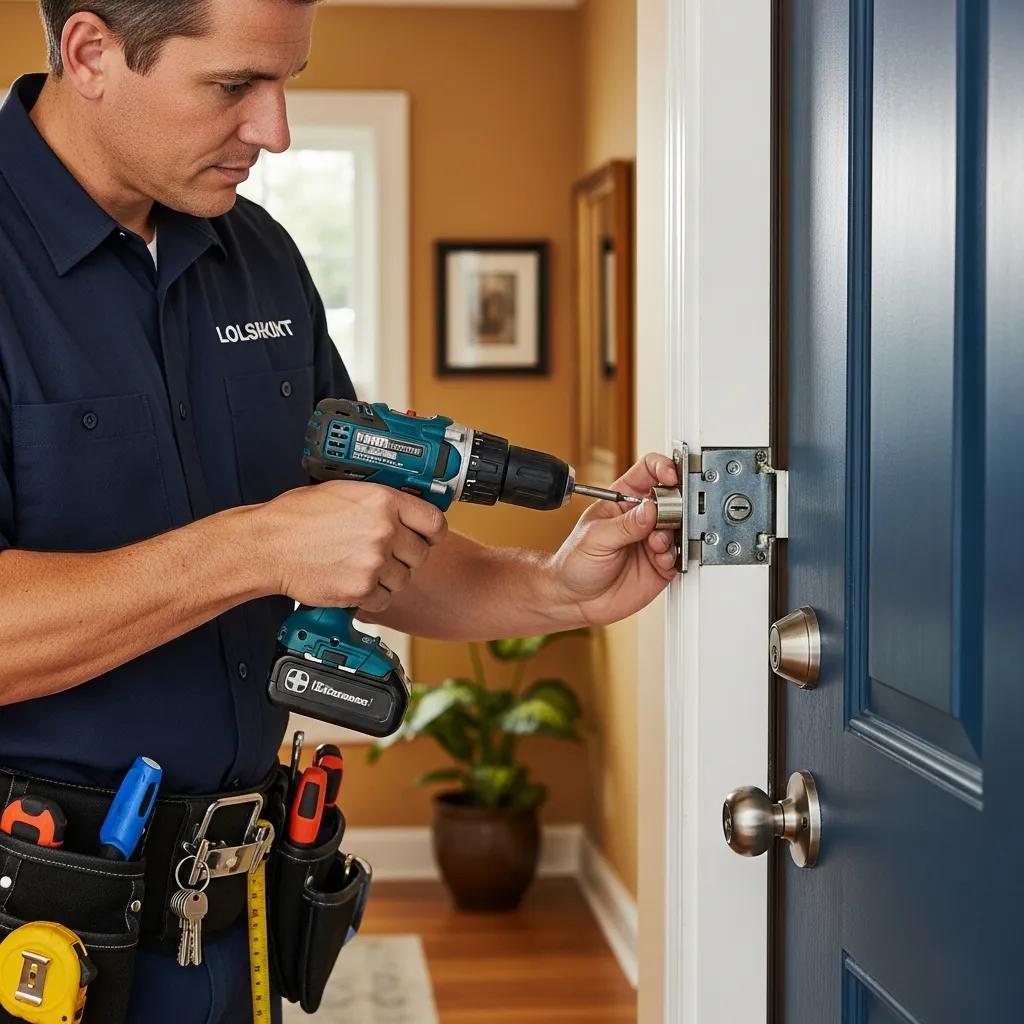
Secure Lock Installation: A Practical, Montreal-Friendly Guide to Doing It Right

Correct lock installation turns quality hardware into real protection. This guide walks Montreal homeowners and business owners through practical techniques, accurate measuring, and security-first choices so your locks resist forced entry and last longer. You’ll learn how backset alignment, strike-plate reinforcement and matching hardware work together to create tamper-resistant entry points, when a smart lock or a high-security deadbolt makes sense, and how to measure, drill, install and test locks step by step. We also compare common lock types, list troubleshooting fixes for typical installation mistakes, explain when to call a professional locksmith in Montreal, and suggest door and garage upgrades to improve security across the property.
Why correct lock installation matters for homes and businesses
A great lock only protects if it’s fitted properly. When hardware is installed with precise alignment, the right fasteners and matching strike plates, impact forces are spread into reinforced parts of the door and frame — not a single weak point. That reduces the chance of a kick-in or pry causing catastrophic failure and lets anti-pick and anti-bump features do their job. In short: good installation converts a lock’s rated performance into actual security you can count on.
How proper installation strengthens overall protection
Proper installation makes every component — latch, cylinder, strike plate and mounting screws — work within the tolerances manufacturers designed. An accurate backset and centered bore reduce leverage points; long load-bearing screws into the jamb move force into the framing; correctly sized strike plates and full-depth mortises keep the strike from tearing out. The result is better resistance to break-ins, less wear over time, and preserved warranty coverage when professional standards are followed.
What can go wrong with a bad installation?
Poor installation creates vulnerabilities: an ill-fitted cylinder can be forced or bumped, misaligned latches can fail to engage, and short or misplaced screws let the strike pull away under force. These faults turn a high-grade lock into a weak link and often void manufacturer warranties, increasing maintenance and replacement costs. Spotting these risks early — and fixing them with correct measurements and fasteners — restores the protection you expected when you bought the hardware.
Common lock types and what they offer

Locks range from simple knobs to multi-point commercial systems. Each type has different security features, ANSI/BHMA grades and installation needs. Choose by matching anti-pick or anti-bump features, grade, and whether you need access control or smart integration. A residential deadbolt usually needs one bore and a reinforced strike; commercial or multi-point systems often require precise alignment, frame reinforcement and, sometimes, electrical work. Understanding these differences helps you pick the right balance of convenience, strength and compatibility with your door.
At a glance — key lock types, their security traits and installation demands:
| Lock Type | Security Features / Grade | Installation Complexity |
|---|---|---|
| Deadbolt | Anti-pick & anti-bump options; ANSI/BHMA Grade 1–3 | Moderate — accurate bore and strike reinforcement needed |
| Smart Lock | Keyless entry, remote access, entry logs (electronic) | Moderate–High — requires compatible door, power and sometimes wiring |
| Knob/Lever Lock | Basic latching; often ANSI/BHMA Grade 2 or lower | Low — fine for interior doors, not ideal as primary exterior security |
| High-Security Commercial Lock | Hardened cylinders, restricted keyways, ANSI/BHMA Grade 1 | High — professional installation recommended for master-key systems |
| Multi-Point Lock | Locking at several points along the door edge | High — precise alignment and frame reinforcement required |
Deadbolts are usually best for exterior residential doors, smart locks add convenience and audit trails, and commercial-grade systems suit high-traffic or high-risk locations. Next, we cover the step-by-step installation process and the tools that keep mistakes to a minimum.
Which residential locks give the best protection?
For most exterior doors, a properly installed deadbolt is the best single upgrade: an extended bolt into a reinforced strike resists forced entry far better than a standard knob or lever lock. Knobs and levers are fine for interior doors but aren’t recommended as primary exterior locks. When fitting a deadbolt, aim for ANSI/BHMA Grade 1 or a strong Grade 2, use long screws that reach the framing, and match cylinder length to your door thickness and backset.
How commercial high-security and access control systems differ
Commercial systems focus on durability, strict key control and integration with access management (badge readers, magnetic locks, audit logs). They use hardened cylinders, patented keyways and electrical components that require wiring, power management and compliance with fire and building codes. For businesses that need control, traceability and zoned access, the mix of mechanical strength and electronic oversight is the right choice — but it raises installation complexity and usually calls for a pro.
Step-by-step secure lock installation: tools, technique and testing
A secure installation follows a clear sequence: inspect the door and jamb, mark exact hole locations, drill and mortise for latch and strike, fit the cylinder and hardware, then test and adjust. Each stage needs the proper tools and attention to tolerances to avoid off-center bores, too-shallow mortises or loose mounting. Test by cycling the lock, checking screw torque and verifying bolt engagement under load. The quick-start checklist below covers the essential steps.
- Measure and mark backset and bore positions precisely using a template.
- Drill the main bore and mortise the latch to the specified diameters and depths.
- Fit the latch and strike plate, reinforcing the jamb with long screws.
- Install the cylinder and exterior hardware, making sure the cylinder sits centered.
- Cycle the lock and test in several conditions; adjust the strike as needed.
- Finish with tamper-resistant screws and confirm smooth, secure operation.
This order prepares you for the tools and measurement tips below, and it also shows where professional help can prevent costly mistakes.
Tools primer: the table below lists essential tools, their purpose during installation, and common usage tips or mistakes to avoid.
| Tool | Purpose | Usage Tips / Common Mistakes |
|---|---|---|
| Drill & Hole Saw | Create the cylinder bore | Use the correct diameter and steady pressure; avoid wobble that enlarges the hole |
| Chisel & Mortise Tools | Cut recesses for latch and strike | Score outlines before chiseling; over-chiseling weakens the jamb |
| Measuring Tape & Template | Place backset and bore accurately | Check door handing and double-check measurements before drilling |
| Screwdrivers & Torque Driver | Secure hardware without stripping screws | Use the correct bit and torque; overtightening strips threads |
| Level & Shim Materials | Keep hardware perpendicular and gap-free | Shim where binding occurs; unlevel plates cause latch resistance |
Using the right tool for each task reduces rework and helps keep the lock’s security features intact. Next, we cover pre-install checks that set you up for success.
What to prepare before you install a lock

Before you start, confirm door thickness, handing, material and that the jamb is solid. These details determine template placement, cylinder length and reinforcement needs. Have a quality drill with the right hole saw sizes, a sharp chisel, measuring tools, a level, long structural screws for the strike plate and safety gear like goggles. Check that the door swings freely, verify the backset, and inspect the jamb for rot or gaps that must be repaired or shimmed before you fit security hardware.
How to measure, drill and install the latch, cylinder and strike plate accurately
Start with the backset — common residential sizes are 2-3/8″ or 2-3/4″ — and center the bore vertically based on door thickness (typically 1-3/8″ to 1-3/4″). Drill at the template marks with steady speed, then mortise the latch face so it sits flush; shallow mortises cause binding. Fit the strike plate with at least three 3-inch screws into the framing so force transfers to structure, not the plate. Test by closing and operating the lock repeatedly, then make micro-adjustments to the strike or add shims until the bolt engages smoothly.
Service note: if your door needs complex alignment, multi-point systems, or electrical integration, consider hiring a local pro — MTL Door Pro offers 24/7 locksmith and garage door services in Montreal with trained technicians who handle installations and testing for both homes and businesses.
Most common installation mistakes — and how to avoid them
Most failures come from bad measurement, the wrong hardware choice, or insufficient frame reinforcement. Prevent them by matching lock grade to the application, measuring twice before drilling, reinforcing the strike with long screws, and avoiding overtightening that can deform parts. The table below pairs common problems with causes and fixes to help you troubleshoot on site.
| Problem (Mistake) | Cause | Fix / Prevention |
|---|---|---|
| Misaligned Strike Plate | Incorrect measurement or too-shallow mortise | Re-measure, chisel a deeper mortise and use shims for perfect alignment |
| Off-center Borehole | Incorrect template use or a warped door | Recenter using the correct template; fill and re-drill if needed |
| Overtightened Screws | Wrong torque during installation | Use correct torque; replace stripped screws and consider thread-lock where appropriate |
| Wrong Lock Grade for Door | Using a low-grade lock on an exterior entry | Upgrade to ANSI/BHMA Grade 1 or 2 and reinforce door/frame |
Tackle these root causes — measurement, alignment, torque and selection — and you’ll avoid most on-site failures and keep the installed lock performing as intended.
How the wrong lock choice weakens security
Using the wrong lock creates mismatches: a Grade 3 knob on a front door, a short cylinder on a thick door, or a non-restricted keyway where key control matters all weaken protection. That can leave doors vulnerable to bumping, picking or brute force. Match the entry’s threat profile to the lock: deadbolts for primary exterior doors, high-security cylinders or access control for commercial areas, and smart locks where environment and power needs are met. Correct selection saves retrofit work and delivers the resistance you expect.
Which measurement and alignment errors cause malfunctions?
Typical errors include the wrong backset, a mis-centered bore, or a shallow strike mortise. These lead to sticking latches, incomplete bolt throw and premature wear. Symptoms include difficulty turning the key, deadbolts that don’t fully engage, or hardware loosening over time. Fixes are re-measuring and re-drilling with proper templates, shimming the jamb to square the opening, and reinforcing with a metal strike plate or full-length jamb kit.
When to call a professional locksmith in Montreal
Decide based on complexity, risk tolerance and consequences of failure. Like-for-like deadbolt swaps on a sound door are often DIY projects. But multi-point locks, master-key or access control systems, heavy commercial hardware or jobs needing structural reinforcement should be handled by a pro. Professionals bring correct torque, warranty-preserving installation, proper smart-lock wiring and fast emergency response. In Montreal, local knowledge of building types and weather-related material concerns — plus 24/7 availability — can make a big difference.
- Yes: Installing commercial master-key or access control systems that require programming and auditing.
- Yes: Replacing locks where the door or jamb is damaged, rotted or needs structural reinforcement.
- Yes: Emergency lockouts, failed cylinders or evidence of tampering that require immediate secure remediation.
- No: Replacing a like-for-like deadbolt on a solid, undamaged door if you’re comfortable with basic tools.
Use these simple rules to decide when to DIY and when professional skill is worth the cost.
Benefits of professional lock installation
Pros reduce risk by bringing trained technicians, the right tools and proven procedures that protect warranties and optimize security. They evaluate door and frame condition, recommend high-value reinforcements (like longer strike screws or metal jamb plates), and install with the correct torque and alignment to cut callbacks and maintenance. They also handle emergencies, integrate mechanical and electronic systems and ensure installations meet regulatory or operational requirements — practical value that often outweighs the fee.
How MTL Door Pro delivers quality and peace of mind in Montreal
MTL Door Pro is a Montreal-based team offering 24/7 locksmith and garage door services with local responsiveness and experienced technicians. Our services include emergency lockout response, lock installation and repair, master-key systems, garage door repair, security upgrades and key duplication. That breadth lets us coordinate combined door and garage solutions tailored to Montreal properties. We focus on fast response, reliable workmanship and clear recommendations so property owners get secure, durable results with minimal downtime.
Strengthen door security beyond the lock
Locking hardware is only part of the story. Reinforce the frame, upgrade strike plates and hinges, consider multi-point locks and secure secondary access points like the garage entry. Reinforcements move force into framing with long screws and metal plates; hinge upgrades and anti-pry measures reduce removal risk. Integrating garage and main-entry protections closes common attack paths and creates a layered defense that’s harder to bypass.
- Reinforce strike plates with long, load-bearing screws and metal reinforcement plates.
- Use hinge bolts or upgraded hinges to prevent door removal on outward-opening doors.
- Install multi-point locking on vulnerable doors for distributed resistance along the door edge.
- Secure garage entrances with upgraded locks and ensure the internal door into the home is reinforced.
Layered measures like these complement a properly installed lock and reduce single-point failures. The next section explains specific frame reinforcements and when to call in a carpenter or contractor.
Frame upgrades that make locks work as intended
Important frame reinforcements include replacing the strike plate with a heavy-duty model fastened by 3-inch screws into studs, installing a metal jamb reinforcement kit to spread load, and adding hinge reinforcement or hinge bolts on the non-latching side. Steel strike plates and full-length jamb wraps outperform basic hardware. If the jamb is rotten or badly out of square, structural repair or replacement should come before lock installation — otherwise the lock can’t meet its rating under attack.
How garage door security ties into lock performance
Garage doors are a frequent secondary entry point. Attackers exploit weak garage-to-house transitions when the connecting door or opener controls are insecure. Upgrade opener controls, reinforce garage service doors and make sure the internal door has a rated deadbolt to reduce the chance a front-door upgrade is bypassed through the garage. For Montreal properties, coordinated locksmith and garage door work provides a practical, holistic security plan.
If you want a combined solution, MTL Door Pro offers 24/7 response and trained technicians who can evaluate both lock installations and garage door reinforcement, recommend priorities and schedule appointments to make your property more secure.
Innovative IoT Smart Lock System: Enhancing Residential and Commercial Security
Security in homes and workplaces is more critical than ever, while traditional key-based locks still carry risks like loss, copying or unauthorized duplication. Industry 4.0 introduces the potential to add IoT features — fingerprint readers, RFID and Wi‑Fi app control — to strengthen access control alongside mechanical locks. This paper examines an IoT-based smart lock combining biometric and RFID authentication with networked management as a complement to conventional locking hardware.
Innovative IoT Smart Lock System: Enhancing Security with Fingerprint and RFID Technology, AA Zainuddin, 2024
Frequently Asked Questions
What should I consider when choosing a lock for my home?
Match the lock’s grade and features to the door and the risk level. For exterior doors choose ANSI/BHMA Grade 1 or strong Grade 2, check for anti-pick and anti-bump features, and make sure the cylinder fits your door thickness and backset. Think about key control and whether you need smart features or audit logging.
How can I tell if my door frame needs reinforcement?
Inspect the frame for wear, gaps or rot and check whether the strike plate is solidly mounted. If the frame feels loose or the strike pulls away under force, reinforce it with longer screws or a metal plate. If the jamb is rotten or badly out of square, repair it before installing higher-grade locks.
What are the benefits of smart locks versus traditional locks?
Smart locks add keyless entry, remote control and entry logs. They’re convenient for guest access and integrate with home automation. But they need compatible doors, reliable power and secure network setup. Use smart locks where convenience outweighs the extra setup and you’ve confirmed their security features.
How often should I test my locks?
Test locks every few months or after big weather changes. Regular checks spot sticking bolts, misaligned strikes or loose hardware before they become failures. Test operation, lubricate if needed and tighten screws as part of routine maintenance.
What should I do if my lock is malfunctioning?
Start with basic fixes: lubricate with graphite-based products, check for misalignment and tighten loose screws. If problems persist or you see signs of tampering, call a professional locksmith to diagnose and repair without causing more damage.
Are there specific locks recommended for commercial properties?
Yes. Commercial sites usually require ANSI/BHMA Grade 1 locks, patented keyways for key control and options that integrate with access control systems. Multi-point locks and hardened cylinders are common where doors see heavy traffic or face higher risk.
What are signs I need to replace my locks?
Replace locks if keys are hard to turn, the mechanism shows visible wear, the lock jams often, or after a break-in or lost keys. If your hardware is old or doesn’t meet current security expectations, upgrading will improve protection.
Conclusion
Good lock installation is the practical step that turns hardware into real, reliable security. With accurate measurements, the right hardware and proper reinforcement, homeowners and businesses in Montreal can significantly reduce risk. If you’d rather leave it to local experts, MTL Door Pro provides 24/7 locksmith services and coordinated garage-door support to get the job done right. Contact us to review your property and prioritize the upgrades that deliver the most security for your budget.