
Preventive Care for Garage Door Openers — Practical Maintenance Checklist & Troubleshooting Guide

Keeping your garage door opener in top shape protects your home, avoids surprise repairs and keeps the family safe. This guide from MTL Door Pro lays out a straightforward maintenance schedule, a clear checklist, common troubleshooting steps, and smart ways to extend your opener’s life. Many homeowners skip routine care and end up paying for it later — follow these simple steps to prevent problems before they happen. We also explain which safety features to test regularly and which jobs are safe to do yourself versus when to call us.
How often should you perform garage door opener maintenance?
Routine care keeps your opener reliable and helps avoid breakdowns. Do quick visual checks every month and schedule a professional inspection every 6 to 12 months. That cadence helps you catch small issues early, before they turn into expensive repairs.
What is the recommended maintenance schedule for garage door openers?
Do a basic check once a month — look over the hardware, test the safety features and run the door to listen for anything unusual. Book a professional inspection every 6–12 months so a trained technician can adjust parts, tighten hardware and identify wear that’s not obvious to the eye. Being proactive will extend your opener’s working life.
How does regular maintenance extend your opener’s lifespan?
Small fixes — tightening bolts, lubricating moving parts, aligning sensors — stop wear from spiralling into mechanical failure. While exact lifespan gains vary by model and use, industry pros agree: consistent maintenance improves reliability, reduces emergency calls and saves money over the long term.
What are the key steps in a garage door opener maintenance checklist?

A reliable checklist keeps maintenance fast and effective. Focus on inspecting and tightening hardware, lubricating moving parts, and testing all safety systems. Those three actions cover most routine issues and keep your system running smoothly.
How to inspect and tighten garage door hardware safely
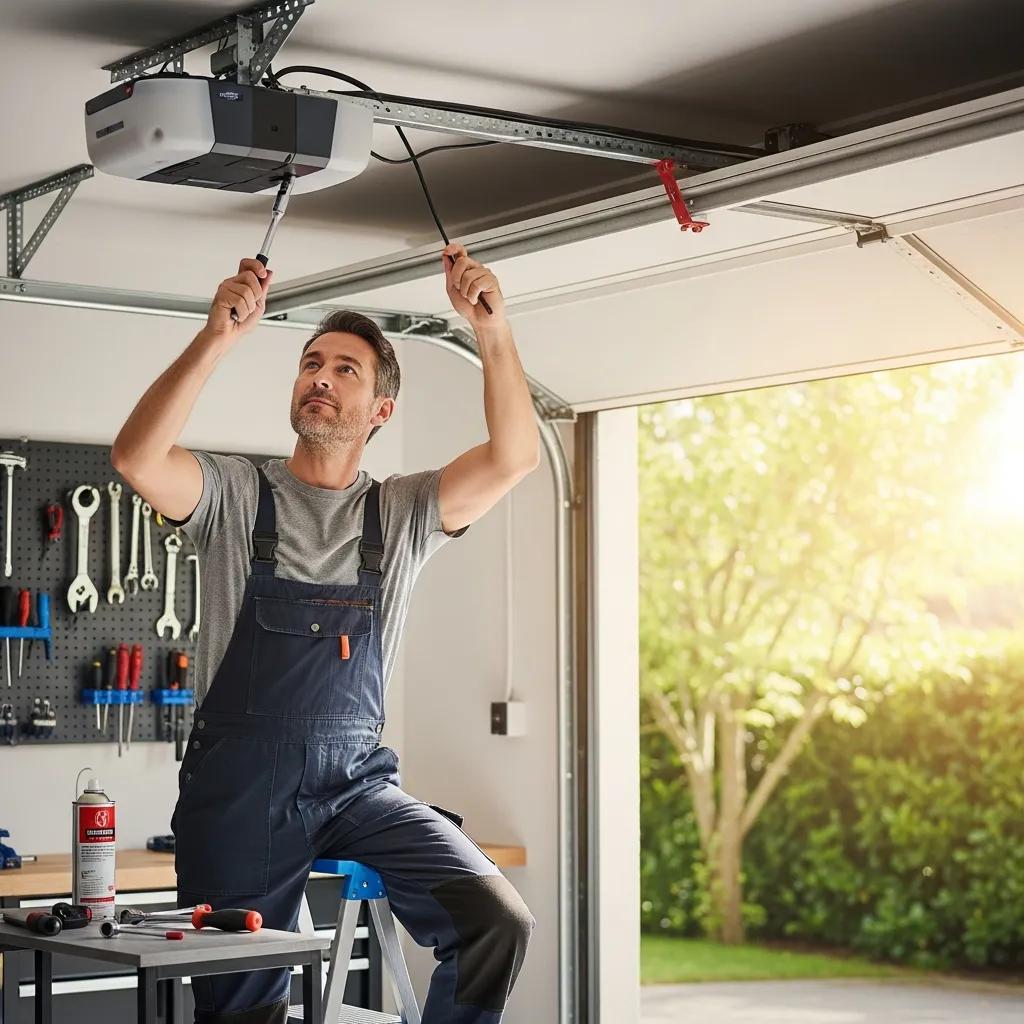
Always disconnect power or unplug the opener before you start. Use a socket wrench to check bolts and screws on the track, hinges and mounting brackets — tighten anything that’s loose but don’t over-torque. Inspect rollers and the track for signs of wear or damage. Wear safety goggles and gloves while you work.
What are the best practices for lubricating garage door opener components?
Use a silicone spray or lithium-based grease on rollers, hinges, bearings and the opener’s rail where recommended by the manufacturer. Avoid heavy oils that attract dirt. Apply sparingly, wipe away excess and operate the door a few times to distribute the lubricant evenly.
How do you troubleshoot common garage door opener problems?
Knowing basic troubleshooting steps can save you time — and sometimes a service call. Common issues include odd noises, the door stopping mid-cycle, or the opener not responding to remotes. Start with simple checks and escalate to professional help if needed.
What are typical signs of garage door opener malfunctions?
Watch for grinding, squeaking, or rattling noises; the door reversing or not closing fully; slow or jerky movement; and non-responsive remotes. Any of these symptoms deserve a closer look to find the root cause.
When should you call a professional for garage door opener repair?
Call a pro if you see electrical issues, repeated failures to operate, a door that won’t reverse on contact, snapped components or anything that looks unsafe. For complex problems, it’s safer and often more cost-effective to have a trained technician diagnose and repair the system — book a service if you’re unsure.
How can you extend the lifespan of your garage door opener?
Extend life by combining routine inspections, timely lubrication and prompt repairs. Adjust maintenance to your environment and usage patterns so wear is noticed and fixed before it worsens.
What preventive care tips help maximize opener longevity?
Follow these straightforward steps:
- Regular inspections: Do a monthly visual check for loose or worn parts.
- Lubrication: Keep moving components lightly greased every few months.
- Safety feature testing: Verify auto-reverse and sensors regularly.
How does seasonal maintenance adapt to Montreal weather conditions?
Here in Montreal, winter ice and slush can freeze tracks or strain motors — clear snow and ice, and don’t force a stuck door. In summer, heat and humidity can affect rollers and seals, so watch for cracking or swelling. Adjust your checks seasonally to match local conditions.
What safety features should you test regularly on your garage door opener?

Safety features prevent injuries and property damage — testing them regularly is non-negotiable. Make these checks part of your monthly routine.
How to test auto-reverse and photo-eye safety sensors effectively
Place a small, safe object (like a block of wood) in the door’s path and close the door — it should reverse on contact. For photo-eye sensors, make sure they face each other, are clean and aligned; if the beam is blocked the door should not close. If either test fails, stop using the door and call a technician.
Why is safety testing crucial for preventive maintenance?
Regular safety tests catch failures before they cause accidents. Ensuring sensors and auto-reverse work correctly protects people, pets and vehicles — and keeps your home compliant with safety standards.
Can you perform DIY preventive care for your garage door opener?
Yes — many routine tasks are safe for homeowners. Know your limits: if a job involves springs, complex wiring or structural repairs, call a pro.
Which maintenance tasks are safe for homeowners to do themselves?
Homeowners can confidently perform:
- Visual inspections: Look for wear, loose hardware or damaged components.
- Lubrication: Apply recommended lubricant to moving parts.
- Testing safety features: Run the auto-reverse and sensor checks.
What tools and lubricants are recommended for DIY garage door opener care?
Keep a socket wrench, screwdriver, ladder, and safety goggles on hand. Use silicone spray or lithium-based grease for moving parts. Follow the opener manufacturer’s guidance and never work on torsion springs or electrical components unless you’re trained.
This table summarizes the recommended maintenance tasks, their frequency, and why they matter for your opener’s reliability and safety.
| Maintenance Task | Frequency | Importance |
|---|---|---|
| Visual Inspection | Monthly | High |
| Lubrication | Every 3 months | Medium |
| Professional Inspection | Every 6 to 12 months | High |
Follow these preventive steps and you’ll reduce surprises, extend your opener’s life and keep your garage safe. When in doubt, reach out to our team for a professional check-up.
Frequently Asked Questions
What are the common causes of garage door opener failures?
Failures often come from worn parts (gears, belts, rollers), misaligned tracks or sensors, electrical issues and dead remote batteries. Regular inspections catch most of these problems early so they don’t turn into breakdowns.
How can I improve the security of my garage door opener?
Keep remotes out of sight, use a keypad with a secure code, and choose an opener with rolling code technology that changes the transmit code each time. Also keep the garage door closed when not in use and add motion-sensor lights around entry points.
What should I do if my garage door opener is making unusual noises?
First check for loose hardware or misaligned tracks and lubricate moving parts. If noise persists, it could be worn gears or a failing motor — have a technician inspect it before further damage occurs.
Are there any specific maintenance tips for older garage door openers?
Older openers usually need more frequent checks. Inspect hardware and alignment more often, keep parts lubricated and consider upgrading safety features if the unit predates current standards. Ask a pro whether repair or replacement makes more sense for reliability and safety.
How can I tell if my garage door opener needs to be replaced?
Consider replacement if it fails often, makes loud grinding noises, struggles to lift the door or is 10–15 years old and lacks modern safety features. A technician can evaluate condition and recommend the most cost-effective option.
What are the benefits of professional garage door opener maintenance?
Pros provide a full system inspection, can spot hidden wear, perform precision adjustments and handle repairs safely. Regular professional maintenance reduces emergency calls, improves safety and extends equipment life — a smart investment over time.
Conclusion
Regular maintenance keeps your garage door opener dependable and safe. Follow the checklist, test safety features often, and adapt care to Montreal’s seasons. When a repair goes beyond basic upkeep, our professional services are here to help — book an inspection to keep your opener running smoothly for years.